Multiracial mental health is made up of the psychological dimensions of growing up and living in a Mixed-race or bicultural body: the identity questions, the othering, the code-switching, the grief, and the particular strengths that come with straddling more than one world. This article is the first in a two-part series. Part II covers healing in the Mixed community.
What is the multiracial experience?
Multiracial, Mixed, or biracial, others want to know “what” we are before learning who we are. There are more multiracial or Mixed-race people today than ever before, yet we can easily feel the experience of othering in the communities we grow up around.
I am the multiracial child of a Taiwanese immigrant, herself the child of parents who fled the Chinese Communist Revolution, and a White dad with French–Scottish heritage.
I spent my childhood summers in Taiwan and the rest of the year in San Antonio, Texas. In Texas, my brother and I were often the subject of other parents’ fascination, and I grew up thinking “exotic” was a compliment. I fielded questions about where I was from and “what kind of Chinese” I was. Better, I suppose, than the times other students offered up guesses about my Asian ethnicity while singing a taunting song and pulling at the skin around their eyes.
I was always seen as the outsider at school in Taiwan too. I can’t count how many times others approached me to practice their English rather than relate to me as a potential friend speaking Mandarin, my first language. Instead of making friends, I was more often seen as an exciting subject to be photographed with; kids would ask to take a picture with me before asking my name.
Why multiracial mental health?
I was highly conscious of my race at a young age (we know now that children notice race by the age of 3, even if they don’t have the language for it) and others were aware of it too. Never sure where I could fit in, I spent much of my childhood feeling different from others. Disconnected from other multiracial kids, as a minority of a minority, I had to learn for myself what it meant to inhabit a Mixed-race body and to make sense of a bicultural life.
Those experiences are a big part of why I’m drawn to seeing clients in therapy who have felt othered or isolated in their identity work. As I unlearned the white supremacy myth and my own internalized racism, I became increasingly motivated to help others do that work. As a therapist for multiracial, hapa, Mixed, and bicultural adults and couples, I’ve learned a lot about the experiences we share and where our healing begins.
As Mixed-race folks, some of us have had to get used to being othered. We may have been told we don’t look like who we say we are, or we’ve been mistrusted. Some of us have faced the striking, cumulative impact of microaggressive questions, often repeated and starting, “Where are you from?” We’ve experienced colorism within our own family and beyond. Or maybe we’ve been accused of trying to be White, or of trying to be anyone besides ourselves. As multiracial children, we witnessed or lived inside the dynamics of interracial relationships or multicultural family life. And then there’s the race check box, where we’re usually forced to pick just one, denying ourselves, or just check “Other” and not be seen or counted.
Multiracial children learn early on that we look different from others. We’re told that we look interesting; we are fawned over, exoticized, fetishized. Everyday life inevitably involves microaggressions. And to the extent that our parents are culturally different from one another or from the dominant culture, we may be raised amid conflicts over differences in language, family structure, parenting values, ways of showing affection, and how to move through the world. We grow up unsure of how to describe ourselves, how to identify, and with whom we fit in. We are neither like nor unlike our peers, and trying to belong leads, inevitably, to some form of erasure, invisibility, and unsung song.
Despite the weight of all that, coming to feel positive, comfortable, and confident in a multiracial identity can lead to stronger mental health, resilience, and adaptability than the literature shows for monoracial peers. Healing goes deeper when we have solid support systems, positive role models, accessible community resources, and a genuine sense of belonging in a larger group with shared beliefs and values. What comes through on the other side is the experience of being uniquely ourselves, seen for who we actually are rather than as a category.
What is Mixed-race, multiracial, or bicultural identity?
Racial identity is nuanced, dynamic, and shaped by historical, social, and developmental forces. When several strands of identity are brought together, that complexity only grows. Being multiracial is more than some breakdown of our identities into percentages. Racial identity encompasses family dynamics, appearance and presentation, perceptions, internalized messaging, and cultural context.
You may identify as multiracial, Mixed, biracial, multiethnic, bicultural, or of multiple heritage if your genealogy belongs to more than one racial background or cultural community. You may also be multiracial if your family is integrated into more than one racial or cultural community.
Multiracial people sometimes describe leading a double life: one race or culture at home and another at school or work. Code-switching, shifting how you talk, present yourself, or act around different groups. Struggling with identity conflicts within a polarized culture. Facing microaggressions at every turn, all potentially while holding cultural nuances and differences within the family.
The legacy of Mixed-race identity in America
In a country founded on the myth of White supremacy, our earliest Mixed-race Americans were the 1600s products of interracial relationships between White colonizers, White immigrants, enslaved African and Indigenous, and Indigenous people. What was described as “race mixing” was there from the very beginning. Many of those relationships were harmful and exploitative, though at least some were based in love. The backlash that followed, in the form of “anti-miscegenation” laws banning interracial relationships, was about power, in the same way that the race-based caste system was. When people defy classification, race-based schemes of categorizing break down. Multiracial people have always been a threat to established power hierarchies. And so we’ve been erased and uncounted throughout history.
How has Mixed-race history shaped the present?
Ronald Takaki’s A Different Mirror tracks how interracial marriage was banned swiftly in enslaving colonies, then spread to areas where slavery did not exist. In the early 1900s, the Hays Code forbade depictions of interracial or cross-cultural romance in the media. Intermixing between races was framed as a moral concern, and the “one-drop” rule was a strategy to mark whole family lines as Black, Indigenous, or Japanese, while simultaneously erasing multiracial identity. Through centuries of racial oppression, multiracial folks persisted through all of it.
It wasn’t until 1948 that White and Asian couples were allowed to marry in California. Then in 1967, Loving v. Virginia established that people of all races could marry, a decision that would later provide precedent for Obergefell v. Hodges in 2015 🌈🏳️🌈🏳️⚧️. At that point in 1967, only 20% of Americans said they approved of interracial marriages.
As of 2011, it’s 86% of Americans who approve of Black-White interracial marriage, a figure that apparently did not include the Louisiana justice of the peace who refused in 2009 to issue a marriage license to an interracial couple. To this day, the reason people still ask “WHAT ARE YOU” is because they want to understand where we fit in the racial hierarchy. We continue to defy classification. That is our multiracial experience.
So what’s changed? What hasn’t?
Growing up multiracial, biracial, or Mixed in the U.S. means carrying a history of persecution, invisibility, oppression, and intergenerational trauma, plus the particular identity questions that come with making a life where we are neither/nor. To heal ourselves and our communities, we must learn and unlearn, finding support as we deepen our awareness of the identities we’ve been pushed to keep unseen.
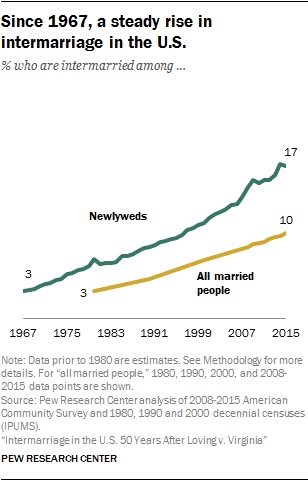
As the multiracial population has grown, we are gradually claiming all the parts of our identities. In 2010, nine million people in the U.S. identified as Two or More Races. The 2020 census showed that population had more than tripled, to 33.8 million. The multiracial-ization of America is one of the biggest shifts in our racial demographics, due both to data collection changes and because interracial marriages and families are at an all-time high.
10% of Americans strong: there are so many of us out there, and yet we grew up so far apart and so isolated, at least in terms of our identity and our likeness to those around us. During the Black Lives Matter movement, many of us turned to look at ourselves differently, attending with care to our experiences of racial identity, privilege, and oppression as we worked to use that awareness to fuel anti-racism. That movement was the context for a discussion group I began on how to practice anti-racism as multiracial folks.
Some in the group reckoned with validating and speaking from their racialized experiences in the skin they’re in. Biracial and Black group members considered how to understand their own experiences of racial violence, having experienced prejudice but also potentially privilege due to lighter skin. Many also explored how to be an advocate for the Black Lives Matter movement when sometimes, and sometimes not, racialized by others as part of the Black community.
Other tough questions came up around increased hate crimes targeting Asians and Asian Americans. For those of us who are part Asian, there’s been a lot to reckon with around how we look, what that means for our safety and privilege, how that might differ for our parents and other loved ones, and how we talk about that with them.
Part II of this series takes up what all of this means for our well-being as multiracial, Mixed, biracial, or bicultural people. If you have questions or want to explore your own multiracial experience in therapy, reach out. At Panorama Therapy, I work with multiracial and Mixed-race adults virtually across the US — people who are ready to stop managing erasure and start being seen.
Miranda Nadeau, Ph.D. (she/her) is a deeply engaged counseling psychologist. She is passionate about helping high-achieving queer & trans folks, multiracial adults, and third culture kids craft a life worth celebrating. Contact Panorama Therapy to work with her in individual, relationship, or group therapy .



 Miranda Nadeau, Ph.D.(https://www.panorama-therapy.com/)